
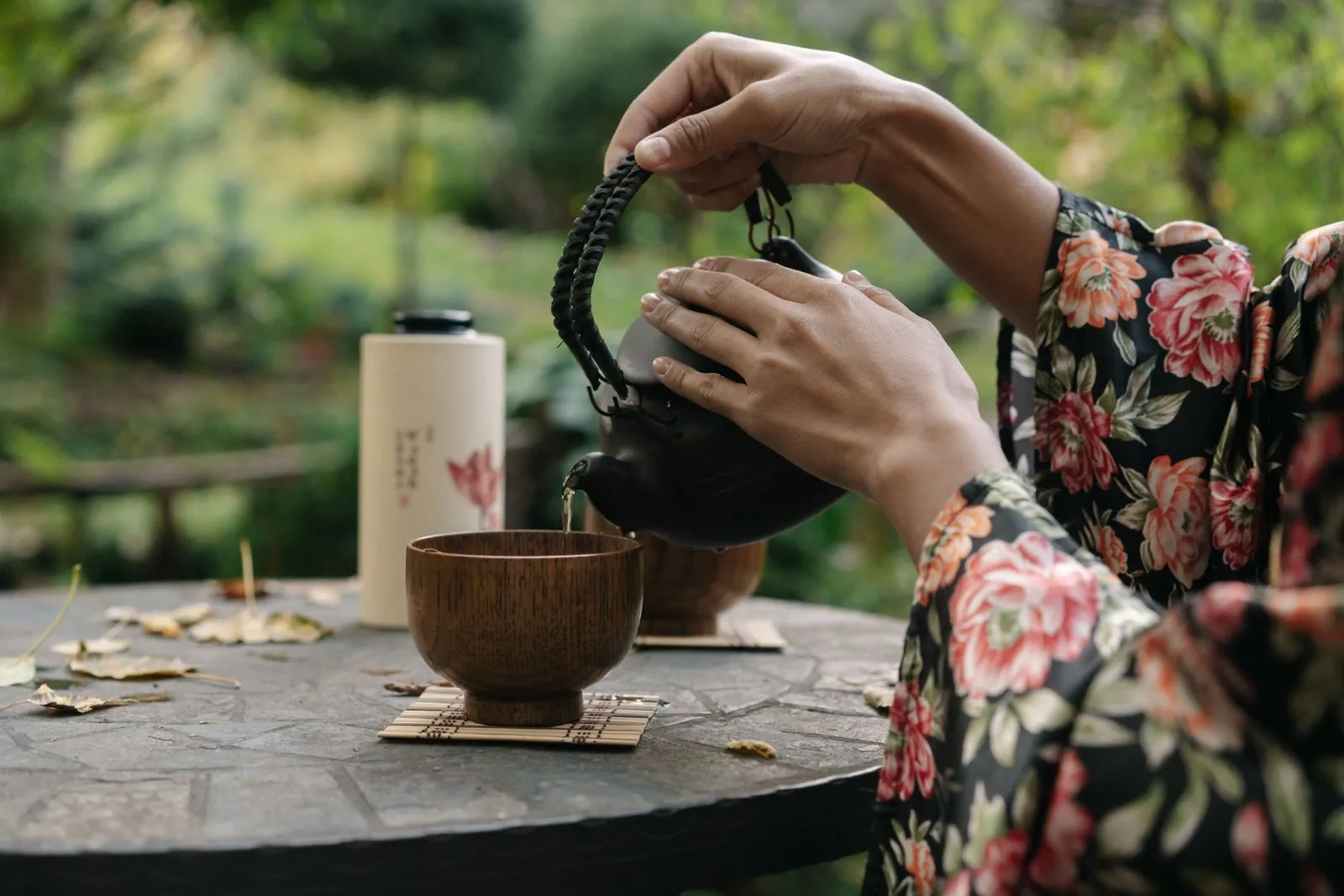
Gongfu tea brewing is a Chinese way of preparing tea with attention to each step. The method uses a small teapot or gaiwan, a relatively generous amount of leaves, and short, repeated steeps. Rather than making one large pot, the brewer pours several small servings and adjusts the timing as the leaves open. This approach makes it easier to notice how aroma, texture, and flavor shift from one infusion to the next.
The Small-Pot Method
Gongfu brewing typically uses a small brewing vessel, such as a gaiwan or a compact clay teapot. Its limited capacity suits a small group and helps the brewer control steeping. A separate pitcher can be used to collect each infusion before serving, so the tea does not continue brewing in the pot and become stronger than intended.
The method often uses more leaves per ounce of water than a large teapot does. That concentration supports brief steeps, but the exact amount depends on the tea, vessel, and personal taste. Start with a modest measure, then adjust. Use water suited to the tea, and leave enough room in the vessel for the leaves to expand.
Repeated Infusions
Instead of steeping the leaves once for several minutes, gongfu brewing uses a series of shorter infusions. Pour hot water over the leaves, steep briefly, and drain the vessel completely. Repeat with fresh water. The first infusion may serve to awaken tightly rolled leaves, though whether to drink it or discard it depends on the tea and your preference.
There is no single steeping schedule for every tea. Begin with a short infusion, taste it, and lengthen the next one if the tea seems too light. If it tastes harsh or overly strong, shorten the steep or use slightly cooler water. Keep track of your adjustments so you can repeat a preparation you enjoy.
Notice Flavor Changes
Each infusion draws out different parts of the leaves’ flavor. Early pours may seem fragrant or bright, while later ones can feel softer, sweeter, or more rounded. These are possibilities, not rules: the result varies with the tea, water, leaf quantity, and brewing choices. Tasting each serving separately lets you follow the tea’s development instead of expecting every cup to taste the same.
Pay attention to more than flavor. Notice the aroma before and after sipping, the tea’s texture, and how long its taste stays with you. If a cup feels thin, try a slightly longer steep next time. If it feels astringent, reduce the steeping time or temperature. Small changes make it easier to find a balanced brew without changing everything at once.
A Practical First Session
Choose a tea you already enjoy, a small gaiwan or teapot, and a cup for tasting. Warm the vessel with hot water, empty it, then add the leaves. Pour in water at a temperature appropriate for the tea, steep briefly, and drain fully. Taste the infusion before deciding how to change the next one. A timer can help you compare steeps, but tasting should guide your adjustments.
Keep the setup simple: a kettle, brewing vessel, pitcher if available, and a few small cups are enough to begin. Rinse the leaves only if it suits the tea and your preference; it is not a required step for every variety. After brewing, remove the leaves and clean the vessel. With practice, you can adjust the process to bring forward the flavors you like.
Gongfu brewing is less about following a rigid recipe than paying attention to how tea responds. A small vessel, controlled pours, and repeated tasting give you room to adjust each infusion and discover the leaves’ changing character. Try the method with a tea you enjoy, or visit Jade Leaf Tea Room to experience a gongfu session in Dallas.